
Where innovation
becomes experience.
The public front door to the Gaia ecosystem.
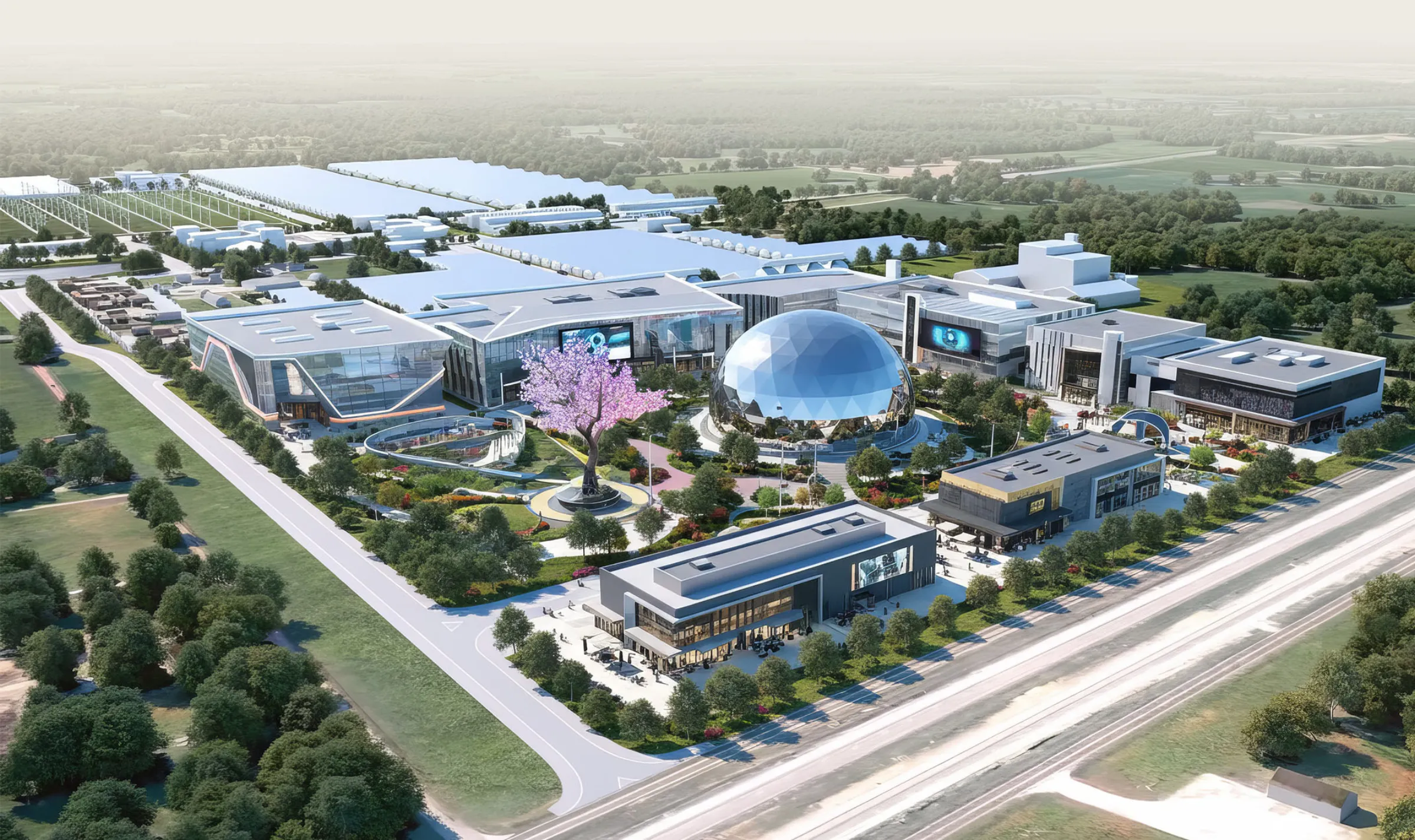
Gaia Discovery Park is a planned 785-acre destination in Rolla, Missouri where Gaia’s energy, water, food, and technology systems become immersive science experiences for families, students, and industry.
CONTACT THE GAIA TEAM785acres
Planned destination site in Rolla, Missouri, serving as the public gateway to the Gaia ecosystem.
Gaia Discovery Park framework
5science zones
Energy, Tech, Crops, Oceans, and Health exhibits inside the central Science Exhibits Dome.
Gaia Discovery Park framework
246M visits
Attendance at the world’s top 25 theme parks in 2024, up 2.4% year over year.
TEA Global Experience Index 2024
42.4M visitors
Visitors to Missouri in FY24, with $20.8 billion in total economic impact.
Missouri Division of Tourism FY24
THE ROLE OF THE PARK
Gaia is the system.
The park is how people meet it.
A planned 785-acre destination that turns working infrastructure into something the public can see, touch, and understand.
Discovery Park is the human-facing layer of the Gaia ecosystem. Everything the campus does for industry gets translated here into an experience that a family, a classroom, and a visiting delegation can follow in the same afternoon.
Most campuses of this kind stay closed to the public, and most science attractions are built on simulations. Discovery Park is planned to sit between the two: a destination where the energy, water, food, and technology systems are real, operating, and on display.
- A public gateway to every system Gaia operates, on one site and one ticket.
- An entertainment destination, a science and technology experience, and an industry engagement platform in a single footprint.
- A showcase for working innovation rather than a static exhibit hall.
DID YOU KNOW
Missouri welcomed 42.4 million visitors in fiscal year 2024, generating $20.8 billion in total economic impact. In Phelps County, where the park is planned, tourism-related spending reached $116 million and supported 2,129 jobs.
Source: Missouri Division of Tourism, FY24 annual report and county table (2024). industry.visitmo.com
CREATIVE THESIS
Three rules the park
is designed around.
How the site is planned, programmed, and operated, stated plainly enough to build against.
01
Discovery over explanation
Guests walk into a working system and work backwards into how it functions. The park is planned around real infrastructure, real processes, and real outcomes rather than static displays.
02
Built to be operated, not just visited
Every zone is designed with the operators in mind: circulation that handles peak days, back-of-house that stays out of sight, and programming that can change season to season without rebuilding.
03
One site, many reasons to return
Families, school groups, and industry visitors are designed for in the same footprint, which is what turns a single visit into a year-round schedule of visits, programs, and events.
DID YOU KNOW
Science centers and museums in the United States recorded 62 million visits across 419 institutions in a single year. That is the audience the park is planned to reach, and it is a category people travel for.
Source: Association of Science and Technology Centers, Annual Statistics Survey (2023). astc.org
WHO THE PARK SERVES
Built for the people
who fill a calendar.
Five visitor groups are designed for from the start, and each one books differently.
PRIMARY
Families
Weekend and holiday demand within the drive market, anchored by the dome, the flagship attraction, and the hotel.
PRIMARY
School groups
K-12 field trips across the region, booked against teachable content in each of the five science zones.
PRIMARY
College-age visitors
Missouri S&T and the wider student population in and around Rolla, a steady weekday and evening audience.
SECONDARY
Educators and programmers
Curriculum partners, workshop hosts, and camp operators who need a site with working systems, not a classroom.
SECONDARY
Industry visitors
Companies, agencies, and delegations that want to see energy, water, food, and technology systems operating at scale.
REVENUE DRIVERS
Six ways the same site earns.
- Admission and ticketing for the park, the dome, and the anchor attraction.
- School, camp, and educator programming booked on a recurring calendar.
- Events, venue hire, and sponsorship across the site.
- Retail, dining, and hotel stays that extend the visit past a single day.
- Original IP, media, and consumer products built from the park’s franchises.
- Expansion zones that add capacity inside the same footprint.
DID YOU KNOW
30.1% of Americans took at least one road trip in a four-week window in 2025, averaging 234.8 miles each way, and family members were the most common companions. The park is planned inside that radius, not at the end of a flight.
Source: AAA Foundation for Traffic Safety, American Driving Survey (2025). aaafoundation.org
FLAGSHIP INTELLECTUAL PROPERTY
Weird Waters.
Built in Rolla.
The park’s first anchor attraction is built around Weird Waters, the animated series developed with Gaia’s media partners. Guests step inside the world of the show, then into the science behind it: water treatment, aquatic ecosystems, and the engineering that keeps water moving.
It is the clearest example of how this park works. Original narrative brings people in. Working infrastructure keeps them interested.
- A story-driven dark ride and immersive theater built on the series.
- Characters and environments that lead guests into Gaia’s working water systems.
- Merchandise, media, and seasonal programming that extend the IP beyond the gate.
- A repeatable model for the energy, food, and health attractions that follow.
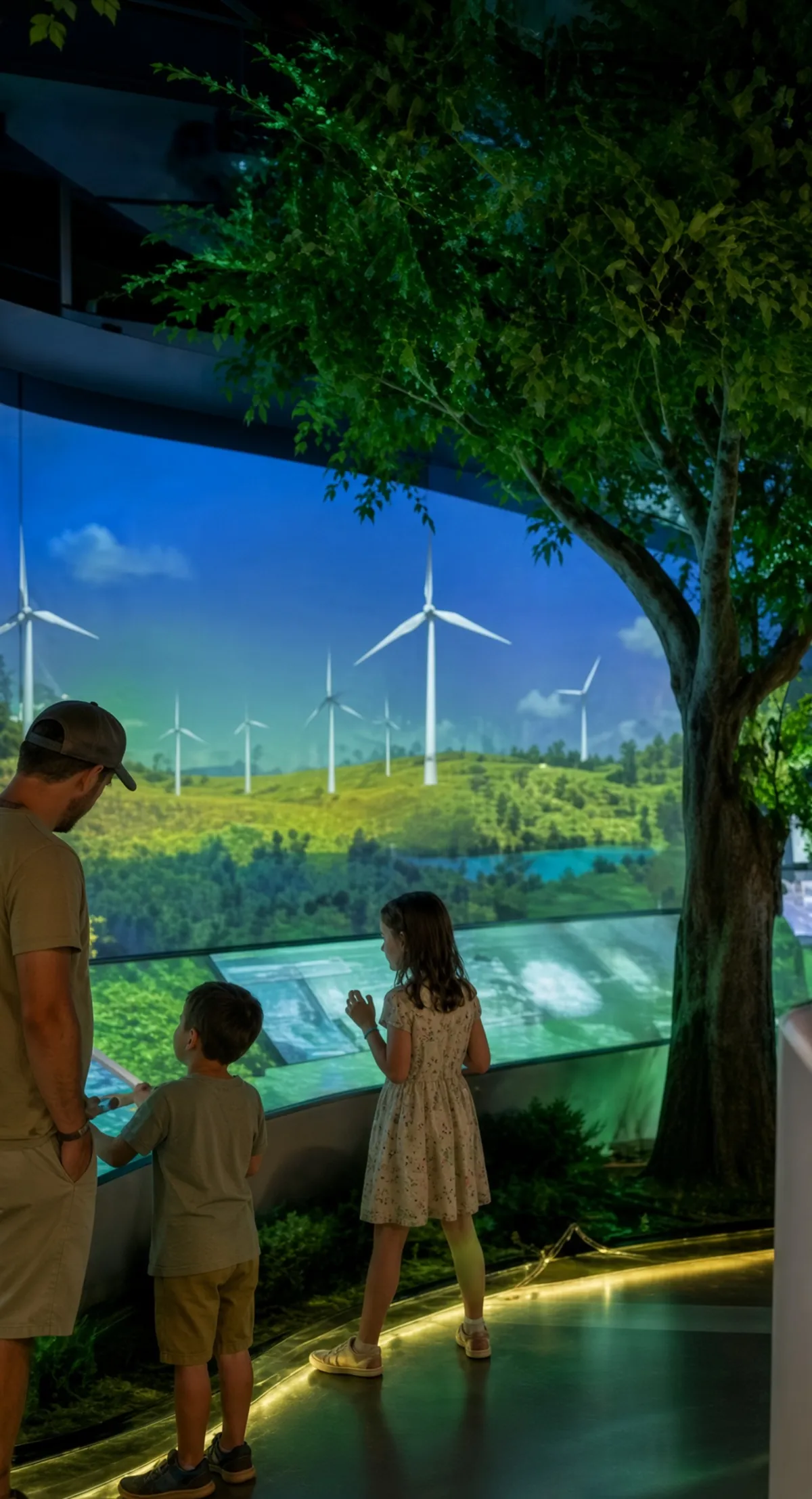 Conceptual rendering. For illustrative purposes only.
DID YOU KNOW
The world’s top 25 theme parks drew 246 million visits in 2024, up 2.4% on the prior year, and the entertainment industry credits intellectual property as one of the most consistent drivers of new investment. Discovery Park is planned around owned IP rather than licensed brands.
Source: Themed Entertainment Association, TEA Global Experience Index (2024). teaconnect.org
EXPERIENCE STRUCTURE
One hub, five zones,
room to grow.
How a visitor moves through the park, and where each part of the experience sits.
Science Exhibits Health · Crops · Oceans · Energy · Tech
- 01Entrance
- 02Retail
- 03Ride
- 04Expansion
- 05Expansion
- 06Expansion
- 07Expansion
- 08Dark Ride
- 09Expansion
- 10Theater Attraction
- 11Dining
- Science Exhibits DomeThe hub of the park and the reason to come back: five science zones under one roof.
- Energy, Tech, Crops, Oceans, HealthFive zones, each with its own exhibits, interactive labs, and teachable content.
- Anchor attractionsA media-driven dark ride and an immersive theater carry the story through the park.
- Retail, dining, and hotelKeeps guests on site and extends the day into an overnight stay.
- Expansion zonesMapped from day one, so the park grows without rebuilding what already works.
MASTER PLAN
The site is planned
as a district, not a campus.
Seven mapped areas, each with a defined job, inside one 785-acre footprint.
- Gaia Discovery Park (Main Area)Arrival, the Science Exhibits Dome, anchor attractions, and the central plaza.
- DiningFood and beverage positioned along the main circulation route.
- RetailMerchandise, media, and seasonal programming at the point of exit.
- Public ParkOpen green space that connects the district and keeps the site open to the community.
- HotelLodging adjacent to the main area for visitors, school groups, and event guests.
- ParkingArrival and parking capacity sized for peak visitation days.
- BOH OperationsBack-of-house, logistics, and operations that keep guest areas clear.
PLANNED SEQUENCE
Ten years, phased
so each year pays for the next.
Every phase below is planned. Dates are the framework, not commitments, and the sequence is set so revenue starts before the last phase is built.
Year 1
Design and approvals
Final design, engineering, and permitting for the main area and the exhibits dome.
Year 2
Site and infrastructure
Earthworks, utilities, and the shared infrastructure the whole park runs on.
Year 3
Soft opening
The Science Exhibits Dome, the anchor attraction, and the arrival plaza open.
Year 4
Full operation
Retail, dining, and the hotel come online and visits extend into overnight stays.
Year 5
Zones one and two
The first two science zones are fully programmed and open to the public.
Year 6PHASE TWO
Phase two programming
The second-phase attractions and the year-round event calendar launch.
Years 7–10PHASE TWO
Zone three and expansion
The third science zone opens and the expansion zones come online inside the same footprint.
STATUS
Discovery Park is at the design and partnership stage. The site plan, experience structure, and phasing shown on this page are the planned framework being taken to investors, sponsors, and operating partners now.
PLANNED
THE EXPANDING ECOSYSTEM
Four pillars that keep
the park returning.
The park is planned as one part of a wider district, and each pillar feeds the others.
Destination Experiences
- Immersive attractions
- Hospitality and lodging
- Retail and dining
- Seasonal programming
- Live events
Education and Learning
- School partnerships
- Workshops and camps
- Interactive science exhibits
- University collaboration
- Public programs
Innovation and Industry
- Technology showcases
- Sustainability systems
- Research initiatives
- Industry partnerships
- Workforce programs
Original IP and Media
- Weird Waters universe
- Narrative franchises
- Character experiences
- Interactive storytelling
- Consumer products
DID YOU KNOW
STEM employment is projected to grow 8.1% between 2024 and 2034, against 2.7% for all non-STEM occupations, and the median STEM wage sat at $103,580 in 2024. A park built on working technology speaks directly to that workforce.
Source: U.S. Bureau of Labor Statistics, The Economics Daily (2025). bls.gov
THE INVESTOR CASE
Why this site,
and why now.
Three things an investor should be able to check before a first conversation.
DEMAND
A market that already travels
Missouri drew 42.4 million visitors in FY24, and Phelps County recorded $116 million in tourism-related spending across 2,129 jobs. The park is planned in Rolla, on the I-44 corridor between St. Louis and Springfield.
PLATFORM
One footprint, many revenue lines
Admission, programming, events, hospitality, retail, and IP licensing sit on the same site and the same infrastructure, so every added line improves the return on the first build.
WORKFORCE
Talent and partners next door
Missouri S&T is in Rolla, with 7,154 students enrolled in fall 2024 and a goal of 12,000 by 2030, giving the park a pipeline of science staff, interns, and programming partners.
DID YOU KNOW
Missouri University of Science and Technology in Rolla enrolled 7,154 students in fall 2024 and has set a goal of reaching 12,000 by 2030. That is a nearby source of science staff, seasonal employees, interns, and programming partners.
Source: Missouri S&T Office of the Chancellor, North Star (2024). chancellor.mst.edu
Part of the same system. Discovery Park is designed to show water, energy, and food systems working together, and Gaia’s water platform carries that work into communities.
SEE HOW GAIA TREATS WATERINVESTORS · SPONSORS · OPERATORS
A destination gets built by
the people who back it first.
We are speaking with investors, sponsors, and operating partners now. Tell us where you fit and we will send the framework, the phasing, and the numbers behind it.
CONTACT THE GAIA TEAM- Explore
- Partner
- Sponsor
- Co-invest